Interview: ‘Augustine was not just fighting for orthodoxy, he was inventing it’
A conversation with Catherine Conybeare on her book Augustine the African
In her latest book, Augustine the African, classicist Catherine Conybeare sheds a new light on one of the most well-known figures of church history: Augustine of Hippo. Although he is mainly seen as influential for the development of European culture, Conybeare argues that seeing Augustine as a North African is essential for understanding the works he wrote. But the story about his African identity is, just like his theological convictions, no matter of simple answers. Wouter Hofland spoke with Catherine Conybeare about her research and writings.
How did you come up with the idea to write this book?
‘25 years ago now, I was reading the philosophical dialogues Augustine wrote in the hills above Milan right after his conversion. In one of those dialogues, he says to his mother: ‘It’s one thing to be secure in your skill, it’s another thing to be secure in your family’ (aliud est enim esse arte, aliud gente securum). He revealed to his mother that his students in Rome had sneered at his accent, while he probably never even realized that he had an accent before he had travelled from Carthage to Italy. That would be the first time that he realised that he was African, and this fascinated me. Although the observation had no place in the work that I was then writing about the philosophical dialogues (The Irrational Augustine, 2006), I stored it away. About 10 years ago, I went back to that idea and started exploring it more fully, and gradually it became clear to me that Augustine was not just from North Africa, but that he was fully aware and engaging with his identity as an African. During this process, it was only gradually that I realised this was not going to be just a set of studies of individual points in his life, but a whole new biography.’
How is it possible that earlier historians, and biographers of Augustine, did not give this special attention to his African identity?
‘Partly because of its effacement by Roman identity. It is not as if his African identity is deliberately being concealed by these earlier historians. For years, people have acknowledged it when they are writing about him, but there is a tendency to say ‘yes, he was African, but he was really Roman’, as if being Roman somehow occluded your African identity. I think I am the first person to think beyond this ‘being Roman’ and to ask the question how ‘being African’ might have played out.
‘Another reason is that it is quite complicated, detailed work to read Augustine while thinking all the time about the question of what difference it makes that he came from North Africa.
‘A third reason is the longer history of failure to acknowledge Africa within the European tradition. I have witnessed this trend in the pushback I have had from people unwilling to accept that his Africanness was significant. I was worried about a different type of pushback, that Africans would object that a North African does not really belong to their continent. But that has not happened at all. They appreciate the tilting of the narrative towards the African continent.’
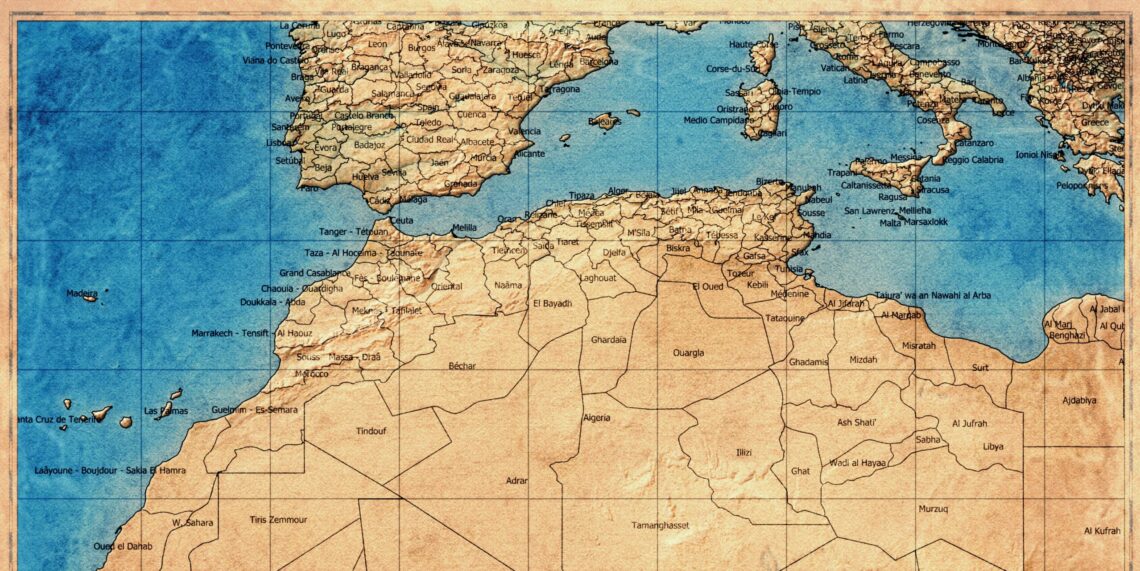
In the introductionto your book, you describe how being in NorthAfrica yourself and looking over the sea towards Italy helped you to understand why Augustine had such ambivalent feelings towards Roman dominance.In what way did your personal experience help you in your research?
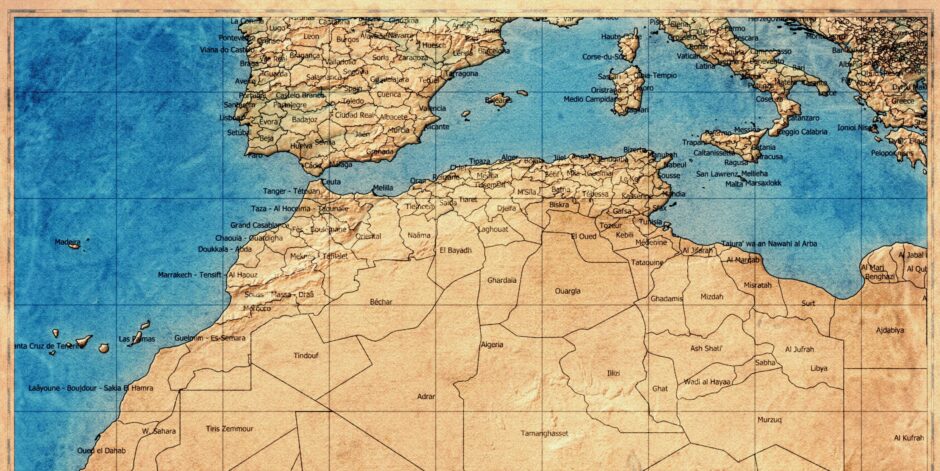
‘It is about looking at the world from the south side of the Mediterranean: what that means for one’s emotional orientation and one’s alliances. If you are looking across the sea, north to the place that is the centre of your world, that makes a difference. I realised that Augustine saw that world not just looking north, but from the point of view of Carthage, on whose subjection in the 2nd century BC the myth of Roman hegemony was based.
‘I had another related realisation last November, when I flew from Tunis to Rome. The flight took me less than an hour, while it takes nearly two hours to fly from Rome to London. I then realised that, in contrast to what our current cultural connections would suggest, there was a much tighter nexus between Rome and Africa, compared to England, the barbaric western place I come from.’
In what kind of historical context did Augustine live?
‘In a context that changed radically over the course of his life. He was born in 354, in a relatively secure and prosperous phase of the Roman Empire – including North Africa. It was some time after the trouble and instability of the 3rd century and the Diocletian persecutions of Christians in the first decade of the 4th century. The conversion to Christianity of emperor Constantine (312) and his edict of toleration issued at Milan (313), with his subsequent favouring of the Christians, had significantly improved the position of Christianity. By the time he died, in 430, Christianity had become the official state religion, but the empire was in all sorts of ways under attack. North Africa could not escape this fate and was being overrun by the Vandals.’
How would you summarise Augustine’s relation towards the Roman Empire, its cultural heritage and its emperors, which eventually became Christian?
‘If we look at the City of God, there are details that clearly undermine Rome’s heritage. And his main contribution is his absolute refusal to think of the Roman Empire as something whose rise and continued success was inevitable. This refusal is crucial for his attitude towards the Roman Empire. An important part of his audience was Christians who were rather romantically attached to this whole idea of Rome. Although there is a section in which he praises the Christian emperor Theodosius, I do not think he cared much about the details of the Christianised imperial rule. For example, in his argument that never in history did a conqueror sacking a city give a guarantee of safety in temples as was given to people in churches during Rome’s sack in 410 – to counter the idea that this sack was the result of the Christianisation of the empire – he does not mention that Rome’s conqueror, Alaric, was a Christian (albeit an Arian one). He chooses to sacrifice this potential significant detail in the context of a broader polemical point.’
You describe Augustine as an intense passionate person. How unique is the personal picture we get from works like his Confessions compared to other people from Antiquity?
‘The Confessions give us an extraordinary picture of an incredibly intelligent, urgent, questioning, questing mind. And that is part of what makes us feel we know Augustine well. The sheer amount of material that survives in terms of the letters, the sermons, the more personal of the treatises is just exceptional. Especially inthe ancient Mediterranean world, from which only Cicero (106-43 BC) could rival that. There are some other figures, particularly writing in Greek, who leave a fair amount of material. I think particularly of Gregory of Nazianzus (329-390) who writes obsessively about his own life, but I think for the rich, multifaceted nature of what survives, and the sheer volume, Augustine really does stand out.’
The biggest share of his works was directed against what he saw as ‘heresies’: Manicheism, Donatism and Pelagianism. How can we explain that Augustine became such an energetic fighteron behalf of ‘orthodoxy’?
‘Maybe we should say that he was not just fighting for orthodoxy, but that he was inventing or discovering it. But I think that the intensity of his battle was in part a product of his personality: he was very passionate and tenacious, and he did not like letting other people get the last word. He always experienced himself as an underdog. That is particularly conspicuous in the fight against the Pelagian Julian of Eclanum at the end of Augustine’s life. I think that Julian, by attacking Augustine as ‘just a little Punic orator’, really played on his insecurities, and the tenacity and the ferocity with which Augustine responds is indicative of that.’
Were his personal life and experiences always so influential for the theological positions he took?
‘Not so much for the positions themselves, but the way his positions hardened, and the way he expressed them, certainly had to do with his personal relationship with his correspondent. So, although the way he expressed his ideas could depend on the circumstances, he had a consistent core of convictions from which specific ideas derived. One example is that by the time he fought Pelagianism, he had a very clear, structural sense of Christ’s role in the world and in the church. And on a very simple level, he thought: if Christ had died to save everyone, then everyone must have something to save. So, the extreme positions about grace and sin in his response to Julian, which had the most far-ranging consequences for the church, originated in clear convictions but were expressed in an exchange triggered by Julian’s provocations about his African identity.’
About his conversion, you state that to become a Christian, first his intellectual arrogance had to be broken. Was this the same arrogance that made him insecure about his African background?
‘Yes, his desires before his conversions were dominated by an ideal of Roman identity. If you wrote a biography of Augustine up until the moment when he escapes from his mother and leaves Carthage for Italy, you could call it ‘Becoming Roman’. He was actively trying to assimilate, to become a Roman in terms of the conventional Roman ideas of worldly success. And then there is a much longer, slower, more ambivalent process of undoing that in which he comes to look upon that initial impulse to become Roman as arrogant.
‘His sense of inferiority as a result of his African identity ran deep. I already mentioned the narrative of the foundation and rise of Rome as depending on the subjugation of Carthage, and this was reinforced by Virgil’s story in the Aeneid about Aeneas, the mythical founder of Rome, who abandoned the Carthaginian queen Dido, who then committed suicide. It was a story which Augustine knew by heart, and about which he wrote that he, as a boy, cried every time he read it. The Aeneid was the fundamental school text for every schoolchild across the entire empire, so everyone was being reminded that North Africa had to be ignored and suppressed to make the foundation of Rome possible. So, being an African was really a reason for bitterness towards Rome, and for a sense of inferiority. Imagine Augustine and his peers as small boys being educated in a small town in North Africa, learning the Aeneid, going to Carthage, and realising they were always going to be considered second best, at least in this master narrative of what it was to be Roman.’
You describe how, directly after his conversion, he stood on the intersection between two worlds: the traditional Roman world of his past and the African Christian world of his future. Could he not have become a Christian and a bishop in Italy?
‘The reason for returning to North Africa after his conversion was very practical: he had given up his job and he had nothing to live on. That is illustrative of his ideas about conversion. There was something absolute about his commitment to Christianity, such that he felt he had to give up his job, just as he felt that he had to give up sex. He could have kept his job and have married a Christian wife. There is something very underexplained about these choices directly following his conversion, and I think that in his later telling he tried to make it look more inevitable than it must have seemed at the time. But clearly, he was not comfortable in the Italian peninsula anymore.’
He neither couldn’t feel at home after his return to his home country in North Africa. Why was that?
‘Partly because his conversion had catapulted him into a Christian world, which was new for him. But another important reason, which is also the one of the big turning points in this book – and this is something no one has noticed or at any rate dwelt on before – is the significance of the death of his son Adeodatus shortly after his return. I think he came home to North Africa envisaging a life not unlike the one he had lived at Cassiciacum, the small village near Milan to which he and some North African friends and family moved directly after his conversion. But with the death of his son, that all fell apart. And there was also the surprise of becoming ordinated a priest. All of that was too shocking to keep a stable sense of home.
‘This will probably have contributed to his notion of us all being wanderers or pilgrims in this world, as so elaborately expressed in the City of God. Another influence for this notion was his desire to follow his mother in that magnificent detachment from place. For example: when she was dying she, in contrast to the expectation of her sons, did not care about being buried in Italy instead of her home region in Africa, stating that ‘no place is far from God’. Augustine was certainly exploring this idea of notion of us all as pilgrims in the world before the sack of Rome and before he wrote the City of God.’
You describe how Augustine, later in his life, had a pragmatic instead of ideological stance towards the use of Punic, one of the North African languages at this time. But you also describe how he, at a much earlier stage, had some correspondence with the pagan grammarian Maximus of Madauros in which he seems to express a much more ideological position when he accuses the latter’s hatredof Punic names as African self-hatred. How did this change, and what does this say about Augustine?
‘In first instance, I thought that that letter exchange with Maximus would be more significant for Augustine’s overall attitude to Punic than it was. When I started investigating his relation to Punic, I thought it would be more aligned with the attitude in the correspondence with Maximus. But in the end, it appeared that his relation to Punic was so much more pragmatic: he wanted to communicate the word of God as widely as possible. In the earlier moment, with Maximus, he was just winning the argument: he had determined that the significance of the Punic names was that they were the names of martyrs, and that is what Maximus was objecting to. But he was not personally invested in Punic as such, except as part of the broader scene.
‘Another aspect of Punic that I only realised later was the way in which it made Augustine constantly aware of the possibility for the word of God to come through in different languages. I do think that is an unbelievably important aspect of Augustine’s thought that is often overlooked, partly because it is part of a more general Christian trend: the notion that any language could gesture towards the holy, but that none is truly holy, they are all approximations of the language of God – a conviction which sets Christians apart from both Jews and Muslims. I think that the awareness of Punic being spoken around him, and of the need to preach in Punic, played a really important role for this conviction of Augustine.’
Did such an opinion differ from other, contemporary, people?
‘Yes, this was a period in which some major Christian thinkers, like Jerome and Ambrose, wanted to claim mastery and to dominate. There is no doubt that Jerome wanted his version of the Bible, the Vulgate, to be the only version for the Latin-speaking world. You could compare such a personal desire with what I already said about Augustine being pugnacious and passionate, but I believe that when Augustine let his personal feelings influence his work it was generally in the service of something else, not for personal mastery. And that is so interestingly revealed in his relation to language in general, and specifically the language of scripture and the possibility of multiple interpretations within scripture. This is an incredibly important part of his character and of his potential influence on European thought. People like hard, simple answers, but Augustine refuses such answers – an aspect of Augustine which is often forgotten.’
It did indeed struck me that although the different heresies which Augustine is fighting have different convictions, the way he fights them is quite similar: all hereticconvictionsarein a way logicaland understandable from a human point of view, and thus tempting and satisfying, but theygive simple answers, and because theydo not think about God’s point of view, theseconvictionsarefundamentally wrong.
‘I think that is exactly right. And you could say that his model for this is precisely his gradual separation from the Manichaeans. He thought Manichaeism would provide comprehensive answers about the presence of evil in this world. And in prising himself away from Manichaeism he also prised himself away from easy answers to other kinds of questions. For example, the Donatists were convinced that their African church was, because of their brave and faithful resistance against the persecutions, the true church, and that good Christians could only be found in this specific church. But Augustine argued that the answer to who is a good Christian would not be clear before Christ’s return. That is no easy and satisfying answer.
‘By the way, I am glad you took this away from the book. I was a bit afraid that all the details that belong to the proper biographical narrative I wanted to tell would obscure the other point that I also, more implicitly, tried to make throughout the whole book: to call Augustine an African is complicated, not just a label to slap on him because we think it is fashionable to think about how Africa came into history. So, in line with Augustine’s refusal of easy answers, I want to challenge the reader not to fall for the temptation of an easy answer regarding his African identity. It is really a complicated multifaceted identity.’
What did you consider your most important finding in this book?
‘One is the very general fact that being African did matter, and it mattered in different ways all through his life. And regarding one specific work he wrote, the City of God, placing Augustine in its proper African context intensifies the mood of interrogation: to think of him as critiquing Roman self-presentation from a North African perspective, and also to think of him critiquing it at that very specific moment after the sack of Rome, when part of his audience was some very privileged Roman refugees to North Africa. These refugees, proud of their identity as Romans, disrupted the order in the North African churches, who did not fully share this identity. Augustine became frustrated by this disruption by these aristocratic Romans, by whose presence he was reminded of the social aspirations in the Roman society he himself had before his conversion. This can partially explain his fierce tone in undermining the myth of an inevitable Roman Empire in the City of God.’

Catherine Conybeare is al lang gefascineerd door Augustinus van Hippo; onder haar eerste boeken bevinden zich titels als The Irrational Augustine en The Routledge Guidebook to Augustine’s Confessions. Augustine the African was een New Yorker Book of the Year 2025. Conybeare doceert klassieke talen aan het Bryn Mawr College in Pennsylvania, waar ze Leslie Clark Professor in de Geesteswetenschappen is.

Wouter Hofland heeft een bachelor in Politicologie en Geschiedenis, en volgt nu een onderzoeksmaster Ancient History aan de Universiteit Leiden. In zijn onderzoek richt hij zicht met name op de transitie van de Romeinse naar de post-Romeinse wereld in de Late Oudheid.
Bestel Augustinus de Afrikaan bij onze partner Boekenwereld
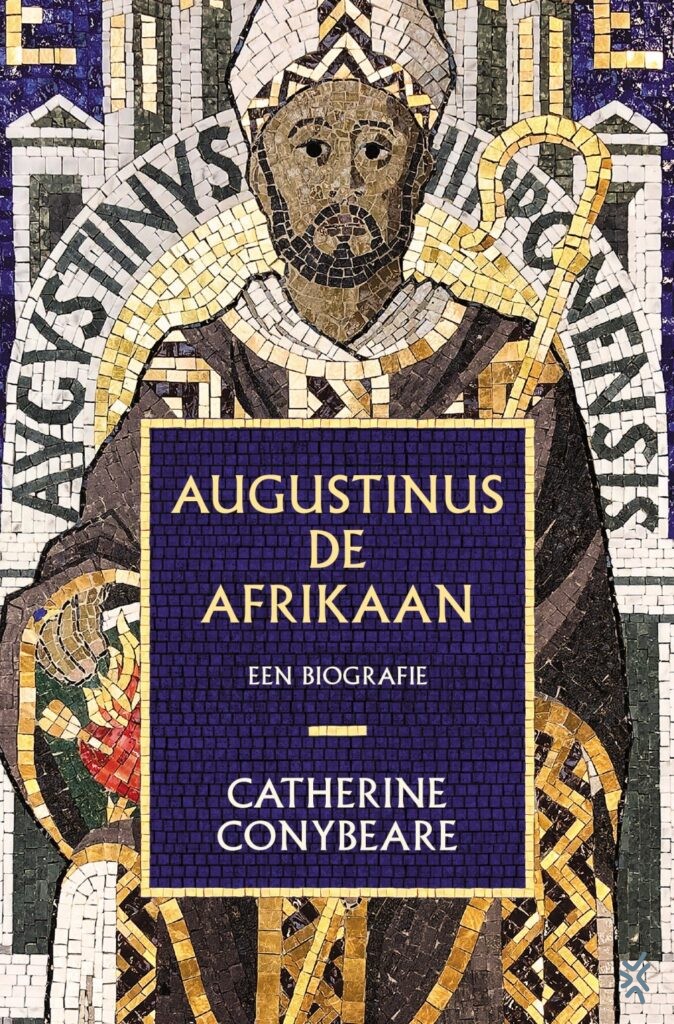
‘Augustinus de Afrikaan’ van classica Catherine Conybeare is een grensverleggende biografie over de invloedrijke theoloog Augustinus van Hippo. Eeuwenlang werden Augustinus’ Noord-Afrikaanse geboorte en Berberse afkomst eenvoudigweg genegeerd, maar dit boek schijnt nieuw licht op deze kerkvader. Catherine Conybeare plaatst Afrika terug in Augustinus’ verhaal. Hiermee haalt zij Augustinus uit het westerse systeemdenken en plaatst hem opnieuw in een oosterse context, waarin het mysterie sterker wordt benadrukt. Aan de hand van brieven en andere fragmenten reconstrueert Conybeare Augustinus’ reizen en toont zij hoe zijn baanbrekende werken vorm kregen vanuit het perspectief van een balling in een Afrikaanse context.
Schrijf je in voor de nieuwsbrief
Wil je op de hoogte blijven van Theologie.nl? Schrijf je dan in voor onze wekelijkse nieuwsbrief. Daarin selecteren we de mooiste, nieuwste en scherpste artikelen van de week. Ook houden we je op de hoogte van nieuwe boeken, speciale events en De theologie podcast.
Word lid van Theologie.nl
Wil je meer artikelen kunnen lezen over boeken, levensvragen, maatschappelijke thema’s en spiritualiteit? Word dan lid van Theologie.nl en sluit een basisabonnement af vanaf €5,83 per maand.