Paul Kingsnorth: “AI is not just another technology”
Interview with Paul Kingsnorth on his book Against the Machine
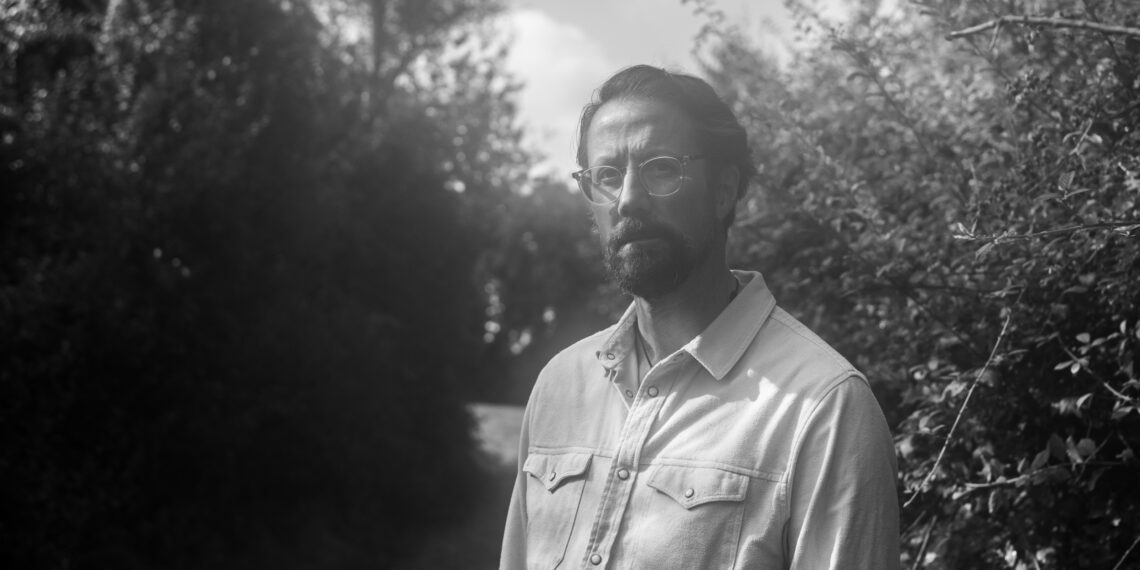
Artificial intelligence is fundamentally changing our lives. It is part of an all-encompassing ‘Machine’ in which technology, capitalism, and cultural uprooting form a toxic mix. Our humanity is at stake. This is what Paul Kingsnorth argues in his book Against the Machine. Later in life, Paul Kingsnorth converted to Christianity and joined the Orthodox Church. Maartje Amelink put a few questions to him about faith, AI, and the ultimate goal of Big Tech.
Do you feel Rage Against The Machine?
‘I’m old enough to have seen that band live in concert in the nineties.Not rage, no. Feeling rage against anything is usually counter-productive. But sometimes I do feel anger or unhappiness about what the Machine is doing to our lives.’
‘The Machine’ functions as a huge metaphor in your book, it refers to big cities, digitalization, progress, uprooting, elites, and so on. Could you give a concise notion? What should readers definitely grasp?
‘It’s hard to be concise. This is why I had to write a whole book on it. ‘The Machine’ is an image which has been used since the industrial revolution by writers, poets and philosophers to refer to the technological-industrial system which is arising around us, and which now defines us. It begins with a way of seeing, which is intensely-left-brained: focused on efficiency, profit, straight lines and scientific measurement. Combine this with a profit-seeking capitalist system and a network of electronic technologies which inculcate these values into us from birth, and you have the Machine. Ultimately, the system makes us as humans more machine-like too.’
Technology has always determined our way of production and communication. What makes AI technology different from, for example, the invention of printing press, steam train or light bulb?
‘None of those can talk to you. None of those seems conscious. None of those has ever persuaded a teenager to commit suicide. None of those is designed by people who are very openly and consciously trying to create a new species of intelligence.
You’re right to suggest, though, that technology has a direction of travel. AI, in one sense, is not a unique thing. It is just the next stage of a process that has been going on for a very long time. It can’t be separated from the electricity grid, the internet, smartphones. It is the next step in the same process. Now we are seeing where the modern technological revolution is taking us.’
People still die, get sick, loose loved ones, get children, make music, make love, enjoy the sun, have a laugh, get angry – all these deeply human experiences. Would that not be way stronger than any technological/political system we can think of?
‘It depends what you mean by stronger. Ultimately, and especially if we are Christians, which I am, we believe that humanity – life – will triumph over artifice and death. But in the meantime, things can get bad. A comparison might be with the communist system, under which millions of oppressed people struggled for nearly a century. Were all the things you have listed above stronger than the system of gulags, secret police, enforced famine, mass executions? The sun still shone and people still had children, but that didn’t alleviate the reality of the oppressive system around them.
‘In any case, if the people building the AI systems have their way, we won’t be dying for much longer. We won’t be having children in the same way either. Designer babies are already a reality. Will we remain human at all? This is the question. What is happening around us at present is revolutionary; in some ways, far more revolutionary than Marxism, I think. It is not ‘just another technology’. It is changing the substrates of our brains. It is challenging what it means to be human and conscious. Our challenge in this time is to think hard about what it means to be human.’
You became a Christian along the way and joined the Orthodox Church. What aspects of Christian faith speak to you the most, regarding living in today’s world?
‘Christianity happened to me unexpectedly, and not for some political or philosophical reason. I am still working to make myself a Christian, which is a lifetime’s effort. When I go to the Gospels though, and I see how Christ lives, and told his followers to live, I see a set of values inimical to our world. That was always true, of course. The Way of Christ was always deeply subversive, which is why he ended up crucified. Today, it sometimes seems that our culture exists to glorify each of the Seven Deadly Sins. If we were to actually live like Christians – simply, rejecting pride and status, giving love to all, aiding the weakest and most needy – there would be no Machine. But of course this is very personal work, not a political project. It begins in our hearts. That’s my challenge, the same one we all have.’
You criticise the deeply influential structures coming from Big Tech – how they dictate our values, our relations, our daily lives. A lot of critics have been dismantling the power of the church for quite the same reasons. The church also dominated our way of thinking, our weekly schedules and our ‘common focus’. How come you ended up recharging an old power structure?
‘I don’t think it’s really a useful comparison. What we call ‘Big Tech’ is a loose agglomeration of corporations, individuals and governments who have created the technological superstructure which underpins the global economy. The Church is an institution that was created to spread a set of religious teachings. You’re right that both these institutions became very powerful, and in many cases corrupt and dominant. But they exist for quite different reasons, and their power comes from different places.
‘I think the power of the Church historically in the West has often been a major problem. The Church is a human institution, and all human institutions tend to reflect human weaknesses and human corruption. But the Church’s time in power is gone now. The Christian Church today, especially in Western Europe, has no economic or political power at all, and very little cultural power either. Even if it wanted to control peoples’ lives, it couldn’t. This is no bad thing either. People like myself go to our churches voluntarily because we see them as spiritual hospitals and we are in need of healing. The power of Big Tech is a different thing. It is at once more diffuse and vague, and yet far more far-reaching and influential today.
‘Having said all that, I think they both have a kind of spiritual core. The theology of the Machine, if you like, is a kind of recharged Christian eschatology, only God is replaced with humanity. Rather than having to wait until we die to enter the Kingdom of God, we plan to build it ourselves on Earth. Perhaps we will upload our minds to the cloud, or perhaps we will never die. Either way, we build paradise ourselves, without having to wait for permission. The people in Silicon Valley often speak openly in these terms. It’s something I write about in the book.’
Sometimes you come across as a MAGA-marketeer opting for two genders, sometimes as an eco-activist living self-sufficiently, sometimes as a right-wing conservative celebrating tradition, sometimes as a Marxist cultural critic dismantling capitalism. It’s almost, dare I say, a postmodern puzzle. How do you integrate all these inner voices?
‘Well, I’m afraid there are only two genders. On that matter, a feminist and a biologist will both agree with a ‘MAGA’ supporter. Your question presupposes that these various ideas are opposed to each other, and that they are also partisan positions. But that only appears to be the case if we assume that the boxes we typically put people into are real or useful. In my view, they’re neither. Modern political divisions of ‘left’ and ‘right’, for example, are at this point totally incoherent. A better way of looking at things, and the way I have always looked at them, is through the prism of limits. All mainstream political categories are about busting through limits. The ‘left’ wants to bust through the limits of tradition, religion, gender norms and national borders. The ‘right’ wants to bust through the limits of economics, ecology and even the boundaries of space. The Machine will happily serve them both, because it is a mechanism for abolishing limits and replacing them with a new world of individual consumer identity, served by technology for profit.
‘Seen another way, then, my assertion of the reality of sexual dimorphism, my desire for a fairly low-impact ecological lifestyle, my belief in maintaining a connection to the best of our cultural traditions and my dislike of the capitalist economy that uproots all of these things fit together perfectly well. There is nothing postmodern about this way of seeing. If anything, it is pre-modern. In the book I call it ‘reactionary radicalism.’ It’s not that uncommon. You just won’t find it anywhere in the mainstream conversation.’
You recognize telos in Big Tech – it’s moving us in a certain direction. What direction would that be, what’s the ultimate goal?
‘The ultimate goal of the Machine is the replacement of nature with technology. It is the total control of the Earth by humanity. Beyond that, it aims for human immortality and the conquest of space. Whether it can succeed in any of these things is another matter. I think not. It looks more like the Tower of Babel to me. But towers can cause a lot of damage before they fall.’
You suggest AI technology is ‘ushered inside’, as if it stems from a dark place where super intelligence originates. Now it comes to life on earth faster than we think – like Frankenstein’s monster. What makes this idea plausible for you?
‘It’s not so much an idea as a suspicion. In the book I play around with a lot of spiritual notions about what could be going on. The notion that the creation of AI is ‘ushering a new intelligence into the world’ is not mine; it’s a quote from a number of AI developers who believe this is what they are doing. What is fascinating and disturbing at the same time is that these people do not seem quite sure what they are doing themselves. Talk to enough of them, or read what they write, and you get the sense they are not working for themselves, exactly. They feel driven to try and create this new ‘God technology’, but they don’t know where the drive is coming from. They don’t know where it will end up, and at the same time as they are creating it, they also fear it, and they are not really in control. If this were the plot of a sci-fi film, where would it be leading? What would be the twist? Perhaps we will find out.’
In line with this perhaps ‘demonic’ nature of AI – could it be that the Holy Spirit is also speaking through algorithms?
‘Well, some people have said this to me. This would be the line that, for example, the billionaire transhumanist Peter Thiel is currently taking. He will openly state that people like me, who are sceptical of the direction of technology, are paving the way for the coming of Antichrist! Of course, I think it is likely to be the other way around. But yes, some Christians will tell you that this is all God’s will. I just remember what Christ said: that you will know a tree by its fruit. Are the fruits of the AI and transhumanist revolution good fruits? Are they leading to more harmony, or love, or ecological healing, or Christian brother- and sisterhood? I am not seeing that. I am seeing ecological destruction, political division, cultural fragmentation and a dark desire to rebuild nature in our own image. Of course, Peter Thiel and co are also getting extremely rich off the back of it, which isn’t very Christian either.’
How should we live in these times, if we wish to stay human?
‘It’s a hard question, and the answer is different for everyone, because we are in different circumstances. I would come back to the notion of limits. Where do we draw our red lines in our relationship with digital technologies, for example? Do we have a smartphone? Will we use AI? Are our kids allowed on screens, or on social media? We need to start by understanding what it means to be human, and understanding what the Machine is. You may not agree with my take on it, but you should understand what is happening. In the book I use the Christian concept of asceticism to discuss our relationship with the system of the Machine. We all have to decide how much to engage. That’s a spiritual discipline, I think, as well as a material one.’
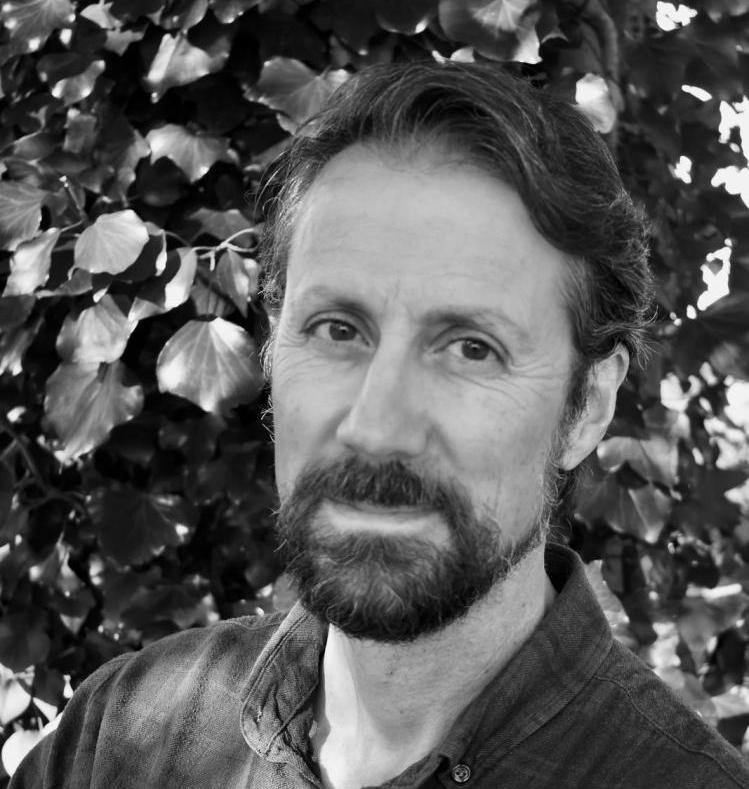
Paul Kingsnorth is an English writer and thinker who lives in the west of Ireland. He is the author of ten books, including fiction, non-fiction, and poetry.
Bestel Tegen de machine bij onze partner Boekenwereld
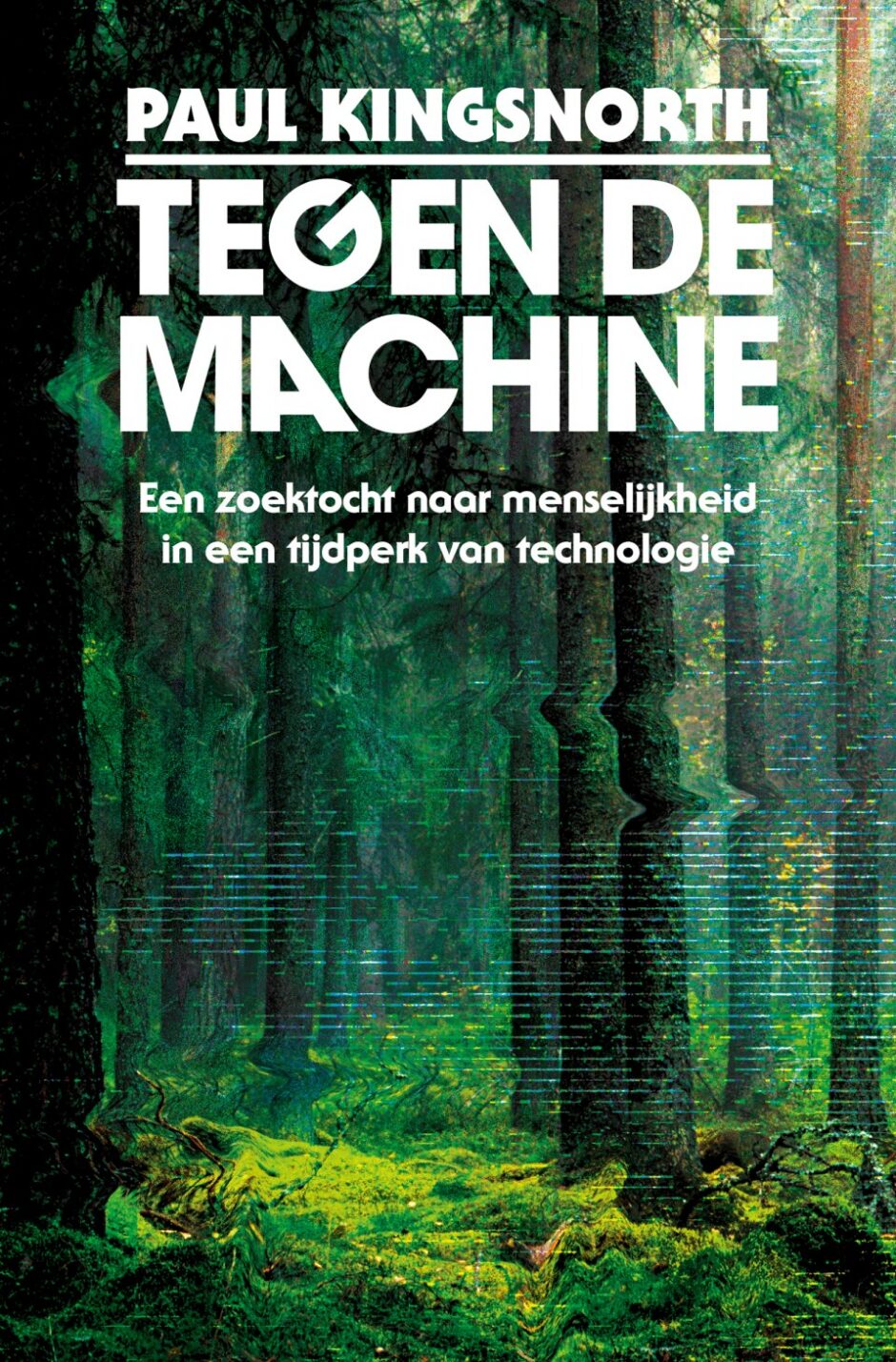
In ‘Tegen de machine’ presenteert dichter en schrijver Paul Kingsnorth een originele beschrijving van het technologische-culturele web dat ons omhult. Het vergt inspanning om in het angstaanjagende tijdperk van de Machine werkelijk mens te blijven. Paul Kingsnorth laat met meesterlijk inzicht in de wortels van het technokapitalisme zien hoe de Machine, onder de vlag van vooruitgang, de westerse beschaving heeft verstikt en de aarde vernietigt. Schrijvend in de traditie van Wendell Berry, Jacques Ellul en Simone Weil, herinnert Kingsnorth ons aan wat menselijkheid vereist: een gezonde achterdocht tegenover gevestigde macht, verbondenheid met land, natuur en erfgoed en diepgaande aandacht voor spiritualiteit.
Schrijf je in voor de nieuwsbrief
Wil je op de hoogte blijven van Theologie.nl? Schrijf je dan in voor onze wekelijkse nieuwsbrief. Daarin selecteren we de mooiste, nieuwste en scherpste artikelen van de week. Ook houden we je op de hoogte van nieuwe boeken, speciale events en De theologie podcast.
Word lid van Theologie.nl
Wil je meer artikelen kunnen lezen over boeken, levensvragen, maatschappelijke thema’s en spiritualiteit? Word dan lid van Theologie.nl en sluit een basisabonnement af vanaf €5,83 per maand.